Adobe Systems Incorporated is an American multinational computer software company. The company is headquartered in San Jose, California, United States. Adobe has historically focused upon the creation of multimedia and creativity software products, with a more-recent foray towards rich Internet application software development. It is best known for the Portable Document Format (PDF) and Adobe Creative Suite, later Adobe Creative Cloud.
Adobe was founded in February 1982 by John Warnock and Charles Geschke, who established the company after leaving Xerox PARC in order to develop and sell the PostScript page description language. In 1985, Apple Computer licensed PostScript for use in its Laser Writer printers, which helped spark the desktop publishing revolution.
As of 2015, Adobe Systems has about 13,500 employees about 40% of whom work in San Jose. Adobe also has major development operations in Waltham, Massachusetts; New York City, New York; Orlando, Florida; Minneapolis, Minnesota; Lehi, Utah; Seattle, Washington; San Francisco and San Luis Obispo, California in the United States.
History
The name of the company “Adobe” comes from Adobe Creek in Los Altos, California, which ran behind the houses of both of the company's founders. Adobe's corporate logo, featuring the stylized "A", was designed by Marva Warnock, wife of John Warnock, who is also a graphic designer. Adobe's first products after PostScript were digital fonts, which they released in a proprietary format called Type 1. Apple subsequently developed a competing standard, TrueType, which provided full scalability and precise control of the pixel pattern created by the font's outlines, and licensed it to Microsoft. Adobe responded by publishing the Type 1 specification and releasing Adobe Type Manager, software that allowed WYSIWYG scaling of Type 1 fonts on screen - like TrueType without the precise pixel-level control. But these moves were too late to stop the rise of TrueType. Although Type 1 remained the standard in the graphics/publishing market, TrueType became the standard for business and the average Windows user.

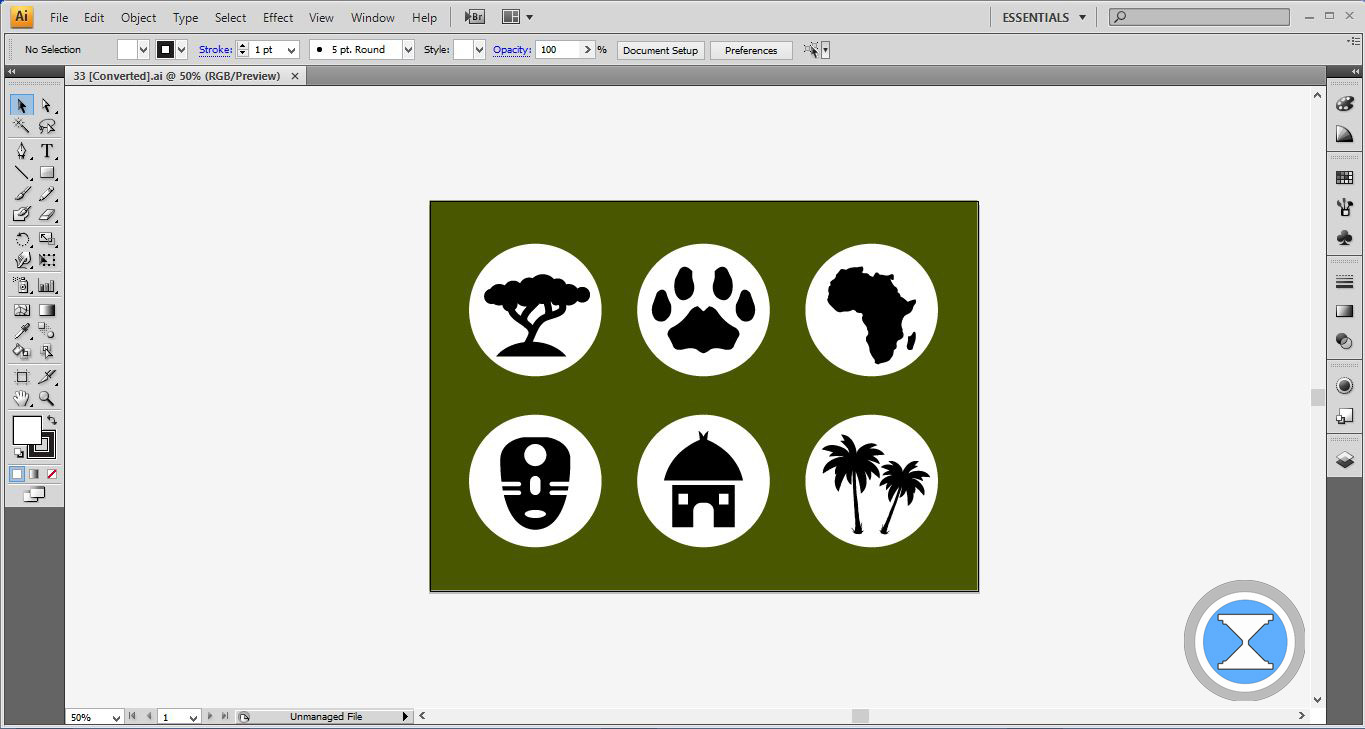
Adobe Illustrator CS4 Screen Shot
Photo Credit: CG Blogger’s Archives
In 1996, Adobe and Microsoft announced the Open Type font format, and in 2003 Adobe completed converting its Type 1 font library to Open Type. In the mid-1980s, Adobe entered the consumer software market with Adobe Illustrator, a vector-based drawing program for the Apple Macintosh. Illustrator, which grew from the firm's in-house font-development software, helped popularize PostScript-enabled laser printers. Unlike MacDraw, the then standard Macintosh vector drawing program, Illustrator described shapes with more flexible Bézier curves, providing unprecedented accuracy. Font rendering in Illustrator, however, was left to the Macintosh's QuickDraw libraries and would not be superseded by a PostScript-like approach until Adobe released Adobe Type Manager. Adobe Systems entered NASDAQ in 1986. Its revenue has grown from roughly $1 billion in 1999 to roughly $4 billion in 2012. Adobe's fiscal years run from December to November. For example, the 2007 fiscal year ended on November 30, 2007.
In 1989, Adobe introduced what was to become its flagship product, a graphics editing program for the Macintosh called Photoshop. Stable and full-featured, Photoshop 1.0 was ably marketed by Adobe and soon dominated the market. In 1993, Adobe introduced PDF, the Portable Document Format, and its Adobe Acrobat and Reader software now known as “Adobe Acrobat DC” and “Adobe Acrobat Reader DC” (latest update for 2015). DC is an acronym for Document Cloud. PDF is now an International Standard: ISO 32000-1:2008. The technology is adopted worldwide as a common medium for electronic documents.
Adobe Photoshop CS4 Screen Shot
Photo Credit: CG Blogger’s Archives
Adobe Acrobat Pro 9 Screen Shot
Photo Credit: CG Blogger’s Archives
Adobe Reader XI Screen Shot
Photo Credit: CG Blogger’s Archives
In December 1991, Adobe released Adobe Premiere, which Adobe rebranded to Adobe Premiere Pro in 2003. In 1994, Adobe acquired Aldus and added Adobe PageMaker and Adobe After Effects to its product line later in the year; it also controls the TIFF file format. In 1995, Adobe added Adobe Frame Maker, the long-document DTP application, to its product line after Adobe acquired Frame Technology Corp. In 1996, Adobe Systems Inc. added Ares Software Corp. In 1999, Adobe introduced Adobe InCopy as a direct competitor to Quark Copy Desk.
Adobe Premiere Pro CS4 Screen Shot
Photo Credit: CG Blogger’s Archives
Adobe After Effects CS4 Screen Shot
Photo Credit: CG Blogger’s Archives
In 1992, Adobe acquired OCR Systems, Inc.; in 1994, the company acquired Aldus Corporation. On May 30, 1997, Adobe reincorporated in Delaware by merging with and into Adobe Systems (Delaware), which had incorporated on May 9, 1997. Adobe Systems Incorporated (Delaware), the surviving corporation, changed its name to Adobe Systems Incorporated concurrently with the merger.
The company acquired GoLive Systems, Inc. and released Adobe GoLive in 1999 and began shipping Adobe InDesign as a direct competitor to QuarkXPress and as an eventual replacement for PageMaker. In May 2003, Adobe acquired Syntrillium Software, adding Adobe Audition to its product line. In December 2004, French company OKYZ S.A., makers of 3D collaboration software, was acquired. This acquisition added 3D technology and expertise to the Adobe Intelligent Document Platform.
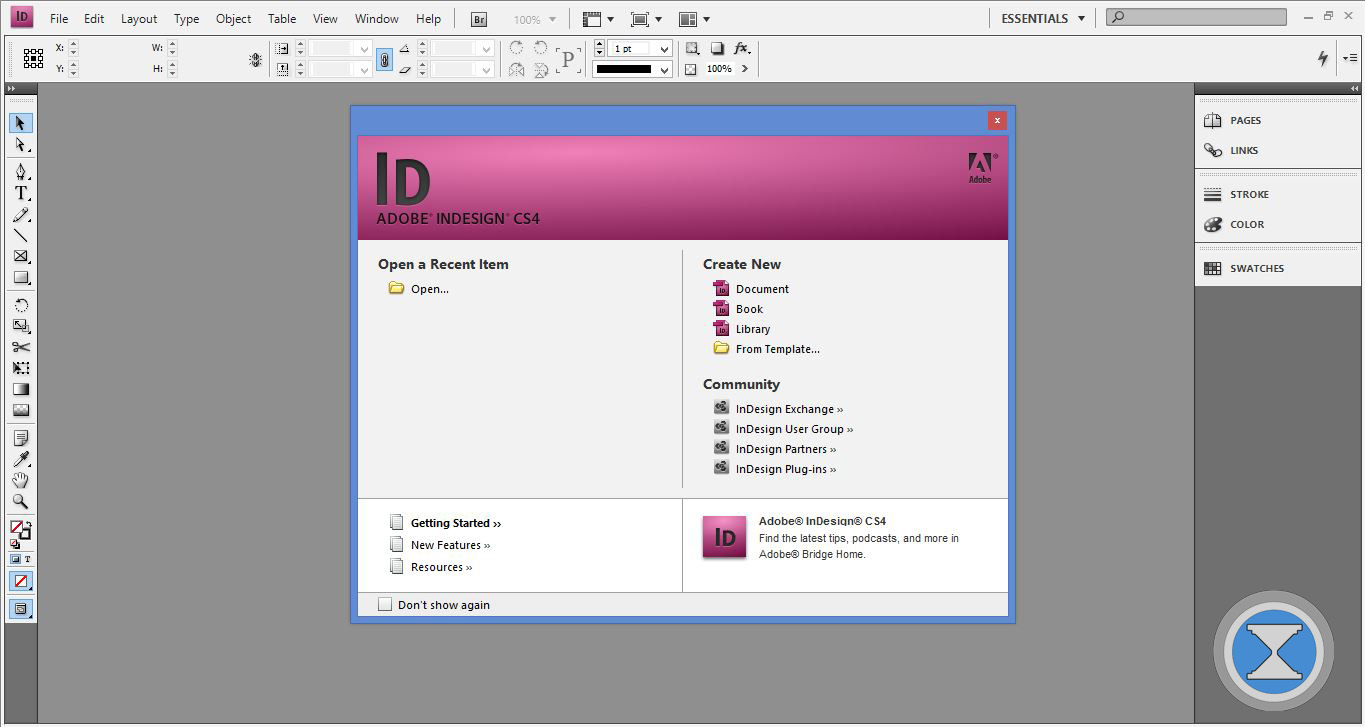
Adobe InDesign CS4 Screen Shot
Photo Credit: CG Blogger’s Archives
On December 12, 2005, Adobe acquired its main rival Macromedia in a stock swap valued at about $3.4 billion, adding Adobe Cold Fusion, Adobe Contribute, Adobe Captivate, Adobe Acrobat Connect (formerly Macromedia Breeze), Adobe Director, Adobe Dreamweaver, Adobe Fireworks, Adobe Flash, FlashPaper, Adobe Flex, Macromedia FreeHand, Macromedia HomeSite, Macromedia JRun, Adobe Presenter, and Macromedia Authorware to Adobe's product line.
Adobe Dreamweaver CS4 Screen Shot
Photo Credit: CG Blogger’s Archives
Adobe Fireworks CS4 Screen Shot
Photo Credit: CG Blogger’s Archives
Adobe Flash CS4 Screen Shot
Photo Credit: CG Blogger’s Archives
Adobe Media Player Screen ShotPhoto Credit: CG Blogger’s Archives
On November 12, 2007, CEO, Bruce Chizen resigned. Effective December 1, he was replaced by Shantanu Narayen, Adobe's current president and Chief Operating Officer. Bruce Chizen served out his term on Adobe's Board of Directors, and then continued in a strategic advisory role until the end of Adobe's 2008 fiscal year.
Adobe released Adobe Media Player in April 2008. On April 27, Adobe discontinued development and sales of its older HTML/web development software, GoLive in favor of Dreamweaver. Adobe offered a discount on Dreamweaver for GoLive users and supports those who still use GoLive with online tutorials and migration assistance. On June 1, Adobe launched Acrobat.com, a series of web applications geared for collaborative work. Creative Suite 4, which includes Design, Web, Production Premium and Master Collection, came out in October 2008 in six configurations at prices from about USD $1,700 to $2,500 or by individual application previously before that Master Collection CS3 had been released going on to be popular amongst CG generalists and professionals. The Windows version of Photoshop includes 64-bit processing. On December 3, 2008, Adobe laid off 600 of its employees (8% of the worldwide staff) citing the weak economic environment.
Adobe announced two acquisitions in 2009: on August 29, it purchased Business Catalyst and on September 15, it bought Omniture. On November 10, the company laid off 680 employees. Adobe announced it was investigating a "coordinated attack" against corporate network systems in China, managed by the company.
Adobe's 2010 were marked by continuing a front-and-back argument with Apple over the latter’s non-support for Adobe Flash on its iPhone, iPad and other products. Apple CEO Steve Jobs claimed that Flash was not reliable or secure enough, while Adobe executives have argued that Apple wish to maintain control over the iOS platform. In April 2010, Steve Jobs published a post titled "Thoughts on Flash" where he outlined his thoughts on Adobe Flash and the rise of HTML 5. In July 2010, Adobe bought Day Software integrating their line of CQ Products: WCM, DAM, SOCO, and Mobile. In January 2011, Adobe acquired Demdex, Inc. with the intent of adding Demdex's audience-optimization software to its online marketing suite. At Photoshop World 2011, Adobe unveiled a new mobile photo service. Carousel is a new application for iPhone, iPad and Mac that uses Photoshop Lightroom technology for users to adjust and fine-tune images on all platforms. Carousel will also allow users to automatically sync share and browse photos. The service was later renamed to "Adobe Revel".
On November 9, 2011, Adobe announced that they would cease development of Flash for mobile devices following version 11.1. Instead they will be focusing on HTML 5 for mobile devices. On December 1, 2011, Adobe announced that it has entered into a definitive agreement to acquire privately held Efficient Frontier.
In December 2012, Adobe opened a new 280,000 square foot corporate campus in Lehi, UT. In 2013 Adobe Systems endured a major security breach. Vast portions of the source code for the company's software were stolen and posted online and over 150 million records of Adobe's customers have been made readily available for download. In 2012, about 40 million sets of payment card information were compromised by a hack of Adobe.
A class-action lawsuit alleging that the company suppressed employee compensation was filed against Adobe, with three other Silicon Valley-based companies in a California federal district court in 2013. In May 2014 it was revealed the four companies, Adobe, Apple, Google, and Intel had reached agreement with the plaintiffs, 64,000 employees of the four companies, to pay a sum of $324.5 million to settle the suit.
Article Credits/References: Google and CG Blogger’s Archives